| Description (click for catalog listing) |
Load-side Multi-Circuit Transfer Switch | Single-Circuit Transfer Switch | Transfer Panel installed as a Sub-Panel | Transfer Panel installed as a Main Panel |
| Sample Images | 

 |


 |

 |
 |
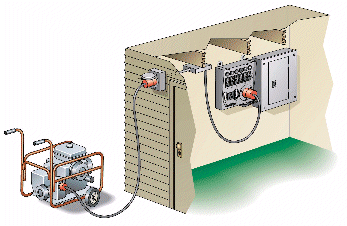
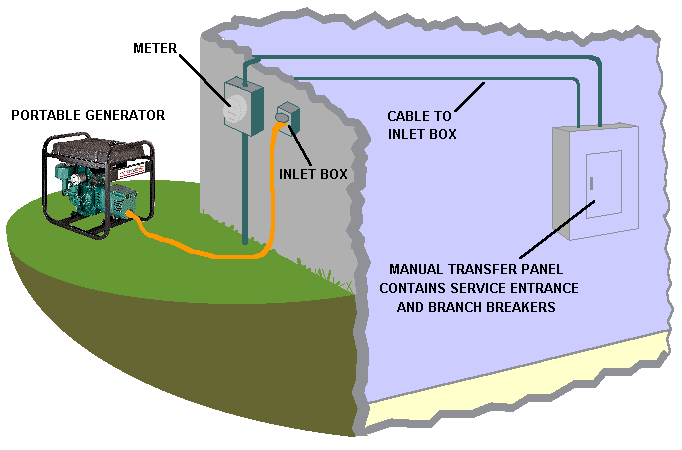
| Installation Arrangements (click images to enlarge) |


 |

|
 |
 |
| Maximum number of branch circuits | 4, 6, 8 or 10 branch circuits | Switches 1 main circuit, as many branch circuits that can fit in downstream panel |
6 to 16 branch circuits depending on model | 36 branch circuits |
| Maximum rating of each branch circuit | 15A or 20A (Q-series 30A) |
200A, 400A or larger main, branch circuit rating limited only by panel (usually 100A max) |
varies depending on model, some limited to 30A, others can accommodate up to 100A | 100A |
| Individual control of each circuit allowing some to operate on generator and others on utility? | Yes | No | No | No |
| Generator Meters? | Included on most models | Included on some models | Included on most models | Included on most models |
| Branch breakers freed up in existing load center panel? | No | No | Yes | --- |
| Additional double-pole branch breaker required in existing load center panel? | No | No | Yes (not included) |
--- |
| Ease of installation? | Easy | Difficult | Medium | Very Difficult (unless new construction) |
| Installation Remarks |
- connect flex conduit to |
- pull electric meter if no |
- purchase double-pole |
- disconnect all wiring |
